
دراسة أكاديمية تدعو الى التخطيط لانتفاضة عالمية كبرى تتزامن مع الذكرى المئوية لوعد بلفور
رام الله - دنيا الوطن
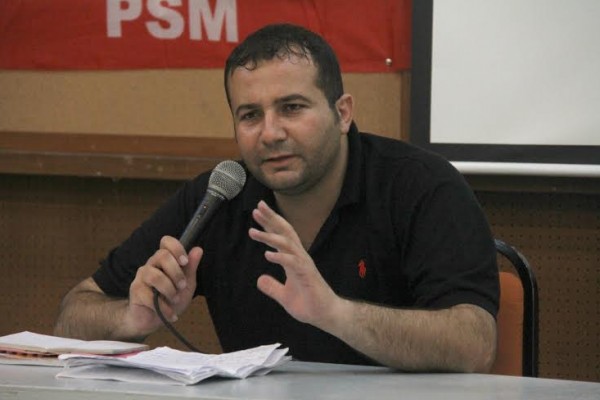
دعا شامخ بدرة الباحث في قضايا السلام والصراع الى اهمية التخطيط منذ الان لانتفاضة عالمية كبرى تتزامن مع "الذكرى المئوية" لوعد بلفور في الثاني من نوفمبر لعام 2017 هذه الدعوة جاءت خلال دراسة اكاديمية أعدها قي مركز دراسات السلام والصراع في جامعة سيدني بعنوان " مستقبل المقاومة الشعبية في فلسطين"
وأكد بدرة على أهمية تعبئة وتوحيد الجماهير والناشطين والنقابات والقوى والفعاليات الشعبية والحركات الدولية للمشاركة الفاعلة والواسعة في الاحتجاجات والمسيرات والمظاهرات والتجمعات التي ستنطلق في هذه الذكرى, على أن يكون التحضير لها بمشاركة مئات الالاف أوالملايين في جميع الأماكن من دولة فلسطين وخاصة أمام نقاط التفتيش الإسرائيلية وجدار الفصل العنصري في الضفة الغربية والقدس، وكذلك بالقرب من المنطقة العازلة في قطاع غزة وداخل الخط الاخضر أراضي عام 1948 وفي جميع العواصم العربية والعالمية أمام السفارات البريطانية من أجل الضغط على بريطانيا لتصحيح الظلم التايخي الذي ألحقته بالقلسطينيين من خلال وعدها للحركة الصهيونية باقامة وطن قومي لهم في فلسطين وبالتالي اقامة دولة الاحتلال الاسرائيلي على انقاض الشعب الفلسطيني والذي تسبب بالنكبة.
وشدد على أهمية الاستفادة من تجربة الشعب الفلسطيني المميزة في المقاومة الشعبية ومن الثورات السلمية " الربيع العربي" في تونس ومصر حيث كانت المشاركة الضخمة بمئات الآلاف أو الملايين عاملا هاما في النجاح لمثل هذه الاحتجاجات.
موضحا أهمية تنظيم هذه الاحتجاجات في وقت واحد في الضفة الغربية وقطاع غزة والقدس أراضي عام ١٩٤٨ من أجل التأكيد على وحدة الشعب الفلسطيني السياسية والكفاحية في الجهود الرامية إلى إنهاء الاحتلال و التنسيق مع جميع المجموعات والأطراف الدولية التي تدعم الفلسطينيين لتنظيم مسيرات في جميع أنحاء العالم لدعم حرية الفلسطينيين واستقلالهم.
واشار بدرة الى ان التجربة الفلسطينية في المقاومة الشعبية هي نجربة غنية وفريدة , حيث مارس الشعب الفلسطيني تاريخيا كل اشكال النضال الشعبي والجماهيري ضد الاستعمار والاحتلال الاسرائيلي , بدءاً من الاضراب العام الكبير عام 1936 وهو الاضراب الاطول في تاريخ البشرية الحديث , مرورا بالانتفاضة الاولى عام 1987والتي تجلت بها ارقى اشكال واساليب المقاومة الشعبية " السلمية " حيث لم تقتصر المشاركة على على فئة ما او مجموعات بعينها بل شارك بها كافة فئات الشعب الفلسطيني وصولا الى الانتفاضة الثانية التي اندلعت في 29 سبتمبر2000 .
مؤكدا على ضرورة تقييم التجربة الفلسطينية الطويلة بموضوعية وتحليل التحديات التي تواجه الفلسطينيين لتفعيل هذا الشكل من المقاومة من خلال تنظيم المؤتمرات الدولية واستضافة الخبراء وقادة الفصائل الفلسطينية من أجل دراسة أساليبهم في النضال وفقا لما حققت هذه الأساليب من نجاحات او اخفاقات لقضيتهم مما يساعد في وضع استراتيجية ورؤية حول بناء الحركة المحلية والإقليمية والدولية و التي يجب أن تكون موحدة ضد الظلم والقمع المتصاعد من قبل الاحتلال الإسرائيلي.
واكد بدرة على ان الفلسطينيين ابدعوا في ابتكار اساليب المقاومة المدنية والتمرد على الاحتلال حيث اعتمدوا على خلق وانشاء المؤسسات الزراعية والصحية والثقافية والتعليمية والاتحادات النسوية والشبابية والعمالية كبديل عن المؤسسات الرسمية للاحتلال الاسرائيلي في الاراضي الفلسطينينة المحتلة " الادارة المدنية
وأشار الى أن الشعب الفلسطيني واصل تشكيل المؤسسات الشعبية المختلفة وتشكيل مؤسسات بديلة لدعم صمودهم ونضالهم مثل:
لجنة التوجيه الوطأني:
شكل الفلسطينيون عام 1981 لجنة التوجيه الوطني من القادة الوطنيين من أجل تنسيق إجراءات المقاومة السلمية معا ضد الاحتلال الإسرائيلي.
لجان المرأة:
تأسس الاتحاد العام للمرأة الفلسطينية (GUPW) في عام 1965، ويهدف الاتحاد إلى تمكين المرأة الفلسطينية من أجل المشاركة الفعالة في الحياة الاجتماعية والاقتصادية والسياسية.
الاتحادات عمالية :
بدأت النقابات العمالية في الظهور في سبعينيات القرن الماضي، في ضوء الصعوبات التي واجهت العمال الفلسطينيين.و خاضت النقابات معاركا نقابية صعبة من أجل الحصول على حقوقهم في التأمين الصحي، وتحسين الأجور، وظروف العمل.
لجان العمل التطوعي:
وفي هذا الوقت، شكل الحزب الشيوعي الفلسطيني لجان العمل التطوعي في الأراضي الفلسطينية المحتلة لتشجيع الشباب الفلسطيني للمشاركة بإيجابية في المشاريع المجتمعية، مثل تنظيف الشوارع والضواحي، وبناء المدارس وتعبيد الطرق الزراعية، وقطف الزيتون.
وقد لعب الحزب الشيوعي الفلسطيني أيضا دورا هاما في إنشاء مؤسسات شعبية بديلة، وساهم في تأسيس مؤسسات كبيرة ومهمة مثل:
جمعية التنمية الزراعية:
جمعية التنمية الزراعية "الإغاثة الزراعية"، تأسست في عام 1983 كرد فعل على سياسة الاحتلال الإسرائيلي في مصادرة الأراضي الفلسطينية, حيث ساهمت جمعية التنمية الزراعية في حماية الأراضي الفلسطينية من المصادرة وعملت على دعم صمود المزارعين
جمعية الإغاثة الطبية الفلسطينية
تأسست جمعية الإغاثة الطبية الفلسطينية في عام 1979 من قبل مجموعة من المتطوعين من الأطباء الفلسطينيين والمهنيين الصحيين, ونجحت لجان الإغاثة الطبية في تأسيس نظام صحي مستقل عن الاحتلال وسلطته
أهمية المقاومة السلمية: -
وتناولت الدراسة اهمية المقاومية اللاعنفية في تحقيق الاهداف الاستراتيجية حيث أشارت الدراسة الى بعض التجارب العالمية في المقاومة الشعبية التي حققت نجاحا في تحقيق أهدافها الاستراتيجية وتشمل الحركات في الفلبين (1986)، وتشيلي (1988) وجنوب أفريقيا (1988) والهند وصربيا (2000) ومصر (2011).. وغيرها الكثير من الامثلة
واذا ما اضفنا النتائج الايجابية التي حققها الفلسطينيون في الانتفاضة الاولى , فانها جاءت ايضا لتأكد النتائج الايجابية في استخدام المقاومة السلمية كما تحققت في البلدان الاخرى .
اذا ما استلهمنا من تجارب الشعوب في المقاومة وقارنا الضرر من حيث الضحايا ,فان عدد الضحايا من قتلى وجرحى بالتأكيد سيكون عاليا باستخدام اساليب المقاومة العنفية مقارنة بامقاومة اللاعنفية .
فعلى سبيل المثال .. في المقارنة بين ثورتين استخدمت كل منهما اسلوبا مختلفا في المقاومة وكانتا تناضلان ضد الاستعمار البريطاني في حينه " احدها انتهج اسلوب المقاومة اللاعنفية "حملة استقلال الهند " بقيادة غاندي , والاخرى ثورة الماو ماو في كينيا والتي انتهجت اسلوب المقاومة العنفية . وبالنتائج يذكر انه وفي ثورة الماو ماو قتل 11503 من المواطنين الكينيين على ايدي القوات البريطانية , الا انه بلغ اجمالي عدد الضحايا في الهند 8000 مواطن هندي من اصل 350 مليون نسمة في حينه مع مراعاة فارق سنوات النضال الطويل للثورة الهندية والفارق في تعداد السكان الكبير في الهند.
أكدت الدراسة على ان اهم الاسباب التي تدفع باتجاه استخدام المقاومة اللاعنفية ضد خصم متغطرس , هي تقليص عدد الضحايا الى اقل عدد ممكن .
وهكذا هو الحال ايضا حيث انطبقت هذه المقارنة في فلسطين بين الانتفاضة الاولى 1987 والتي اعتمدت المقاومة اللاعنفية , والانتفاضة الثانية 2000 والتي تنوعت بها اساليب المقاومة بين اللاعنفي والعنفي , فانه وخلال الانتفاضة الاولى في الفترة ما بين 1987- 1993 استشهد ما يقارب 1300 فلسطيني , اما وخلال الاربع سنوات الاولى ارتفعت حصيلة الشهداء ..
يمكنكم الاطلاع على الدراسة كاملة والتفاصيل باللغة الانجليزية:
"The Future of Nonviolent Resistance in Palestine"
By: Shamikh Badra
Nonviolent resistance is a strategy for resisting oppression and rejecting surrender and acquiescence through methods of nonviolent actions It does not include physical violence or the threat of abusive power against humans.
According to Gandi, nonviolent resistance, "implies, the very opposite of weakness. Defiance combined with non-retaliatory acceptance of repression from one's opponents is active, not passive. It requires strength, and there is nothing automatic or intuitive about the resoluteness required for using non-violent methods in political"(Cumberland, RI, 2009).
This paper will discuss the unique experience of the Palestinian people in nonviolent resistance in their struggle against the imperial powers and Israeli occupation from the general strike in 1936, until the second Intifada in 2000.
It attempts to assess this experience, and to analyze the challenges that face the Palestinians to activate this form of resistance especially in the Gaza Strip.
In addition, I will examine to what extent the Palestinians adhere to the theories of nonviolent resistance. I will also provide some of the ideas that may contribute to enriching and activating nonviolent resistance in Palestine.
Nonviolent Action:
According to Weber and Burrowes, nonviolent action includes acts of protest and persuasion, noncooperation and nonviolent intervention designed to undermine the sources of power of the opponent in order to bring about change (Weber and Burrowes, a. 2014) In this respect, Palestinians have a unique experience and a long history of nonviolent action against imperial powers and Israeli Occupation. They have used all kinds of nonviolent action such as the following:
Nonviolent protest and persuasion:
This form of nonviolent action consists of methods of acts of peaceful opposition or of attempted persuasion, extending beyond verbal expressions.
It includes marches, vigils, pickets, the use of posters, street theatre, painting and protest meetings (Weber and Burrowes, b.2014).
Historically, the Palestinians have used these methods in their struggle against the occupation, especially at the first intifada in 1987, the Palestinians at this period dominated the streets, and closed the refugees camps with barricades and stones, graffiti, painting, barricading, burning tires. Widespread rallies, and protests during the first Intifada occurred everywhere in the Gaza Strip, the West Bank, and in Jerusalem (Cobban, a. 2012).
At the beginning of the second Intifada which erupted on September 29, 2000, Palestinians also organized marches, vigils, and various protests all over the Palestinian territories.
Noncooperation :
This form of nonviolent action is common and has been used in different peaceful rebellions around the world. In general, such action includes the intentional withdrawal of collaboration with authorities - a dictatorial regime, or, in the Palestinian case the occupation administration.
The methods of this kind of the nonviolent action include strikes, boycotts and war tax resistance, economic and boycotts of legislative bodies and political elections (Weber and Burrowes, c.2014).
For example, the General Strike of 1936 in Palestine which continued for six months, was organized as a protest against the British occupation of Palestine.
This strike is considered the longest strike in modern history
and is an apt example of nonviolent action and noncooperation during that period. (El-Saha, a.2014).
The First Intifada
The noncooperation was effective against the Israeli Occupation in the first Intifada. The Palestinians used many methods of noncooperation such as: strikes, boycotts of Israeli products refusal to pay taxes, shortened workdays by shopkeepers in the Gaza Strip, West Bank, and Jerusalem.
The economic boycott consisted of refusal to work in Israeli settlements, boycotting Israeli products, refusing to pay taxes, refusals to drive Palestinian cars with Israeli licenses, as well as boycotting Israeli civil administrative institutions in the Gaza Strip and the West Bank(Cobban, b. 2012).
The Second Intifada
During the second Intifada, The Boycott, Divestment and Sanctions Movement "BDS" provides another important example of noncooperation. BDS is an international campaign against Israel until it complies with international law. It was established on 9 July 2005 by over 170 Palestinian non-governmental organizations. It aims to end the Israeli Occupation of Palestine, and to achieve equal rights among the population and the right of return of Palestinian refugees to their home according to the United Nation resolution 194 (BDS, 2005).
Nonviolent intervention:
This involves founding alternative political, economic and social institutions and organizations like cooperatives, alternative schools, parallel media. Gandhi mentions to this kind of the as the constructive program(Weber and Burrowes, d.2014).
Such nonviolent action has been used by the Palestinians in crucial different historical periods. For example, the general strike in 1936 - as it has been mentioned – lasted for six months, and obliged Palestinians to form alternative economical cooperatives in order to have their needs met during the general strike.
Palestinians also have worked hard in order to keep struggling against the Israeli occupation, as in their building alternative economical cooperatives and political institutions, particularly the period from 1967-1987(Faces of Hope, a.2005).
The Palestinians developed their methods in struggle, and they continued to form different popular institutions as alternative institutions to support their steadfastness and struggle such as:
The Committee of Guidance:
The Palestinians formed in 1981 the Committee of Guidance from national leaders in order to coordinate the nonviolent resistance actions together against the Israeli Occupation (Faces of Hope, b.2005).
Women ’s Committees:
General Union of Palestinian Women (GUPW), was established in 1965, the union aims to empower the Palestinian women in order to participate effectively in social, economical, and political life(Faces of Hope,c.2005).
Trade Unions:
Trade unions started to emerge after the 1970s, particularly in light of the difficulties that confronted Palestinian workers.
Trade unions waged hard struggles in order to obtain their rights to health insurance, to improve wages, and work conditions(Faces of Hope,d.2005).
The Voluntary Work Committees:
During this time, the Palestinian Communist Party formed voluntary work committees throughout the Occupied Territories to encourage Palestinian youth to participate positively in the community projects, such as cleaning streets, suburbs, building schools, paving agricultural roads, and harvesting olives (Faces of Hope, e.2005).
The Palestinian Communist Party also played an important role in establishing alternative popular institutions, and contributed to found significant and important institutions such as:
The Agricultural Development Association:
The Agricultural Development Association "PARC", was founded in 1983 as a reaction to the policy of the Israeli Occupation in confiscating Palestinian lands. The Agricultural Development Association contributed to protect the Palestinian land from confiscation and to support the steadfastness of farmers (PARC, 2014).
Palestinian Medical Relief Society (PMRS):
Palestinian Medical Relief Society was established in 1979 by a group of volunteers from Palestinian doctors and health professionals.
The Medical Relief Committees succeeded in founding an independent health system from the Israeli Occupation and its authority((PMRS, 2014).
The importance of the nonviolence resistance :-
Even a brief examination of the history of nonviolent resistance shows that, in attaining strategic goals, such methods are more efficient than violent resistance. Examples of nonviolent resistance movements which have achieved success against ruthless opponents include movements in the Philippines (1986), Chile (1988), South Africa (1988), East Germany and a range of other authoritarian communist regimes (1989), Serbia (2000), Egypt (2011) and many others((MacLeod, a. 2015).
The positive results which Palestinians achieved during the first Intifada also seems to confirm the positive results achieved in those other countries.
The casualties:
One of the most important reasons to use nonviolent resistance against an extremely ruthless opponent is that it is likely there will be fewer casualties.
The number of deaths and injuries in violent action will be higher than the casualties of nonviolent action. For example, Keyes compared Gandhi’s independence campaign with Mau Mau resistance in Kenya. Both movements were anti-colonial struggles against the British Empire. In Kenya the Mau Mau waged a campaign of political violence while the Indian independence movement used nonviolent action.
The results regarding the casualties mention that throughout the Mau Mau uprising, the British killed 11,503 Kenyans. In contrast, throughout the Indian struggle, the total number of recorded deaths reached 8,000 of a total population of 350 million (MacLeod, b. 2015).The same trends occurred in Palestine as in a comparison of the first Intifada which adopted the nonviolent actions and the Second Intifada which adopted the methods of violent and nonviolent actions.
During the first intifada from 1987-1993, nearly 1300 Palestinians were killed. (Al Jazeera World, 2014).
By comparison, in the second Intifada, between September 28, and the end of September 2004, the fourth anniversary of the second intifada, at least 3,342 Palestinians were killed (Faces of Hope, f.2005).
"The Third Intifada"
The strategic dimension:
The strategic dimension of non violence involves careful analysis of the opponent’s power and the ways they depend on ordinary people. This analysis needs to be influenced by a plan that increases the active participation of ordinary people (MacLeod, c.2015).
Therefore, it is important to analyze the power of the Israeli Occupation which is supported by the US, which has weapons, fighter jets, a navy and massive military armory such as: F-16 Fighting, Falcon fighter jets, and the AH-1 Cobra and AH-64D Apache attack helicopters (Military of Israel, 2015).
These weapons, fighter jets and massive military armory will not necessarily be effective in the confrontation against the nonviolent resistance. Such resistance has the potential to curb the strength of the opponent and support the civil resistance when it faces a much stronger opponent.
Israeli forces use of military weapons against nonviolent resisters, did have the effect of provoking moral outrage among the Palestinian people and a a result the military regression activated what is known as backfire.
Preparation and Planning to Build Movement Resilience to Repression:
Preparation and planning are significant factors for waging nonviolent resistance.
The leaders of the movement should take into account some crucial steps in order to prepare participants to wage nonviolent struggle against ruthless opponents. such crucial steps include,
Undertaking risk assessments and devising safety plans (MacLeod, d.201) :
If Palestinians take this principle into consideration, as with regard to a possible "Third Intifada", they will need a a deliberate plan to build movement resilience to repression of the Israeli Occupation. Within such a plan they should evaluate and examine the risks that can face and how they could overcome or reduce these risks.
For example, the buffer zone in Gaza is considered as one of the most difficult obstacles that Palestinians face in order to activate non-violent resistance in the Gaza Strip. This very dangerous zone.
Has been imposed by the Israeli occupation inside the Palestinian territories in order to prevent people confronting the Israeli Occupation and thus preventing them from confiscating their lands. It extends over 1,000 meters and is negatively affecting thousands of farmers (IRIN NEWS, 2008).
For example, from my experience in this field, when I participated in the protests that were organized against the buffer zone and the Israeli occupation, I remembered that we faced many difficulties. Everything was dangerous, especially if we were walking for a long distance. The roads were so rugged, which prevented ambulances from entering and arriving at the point of a confrontation. I remembered also the Israeli occupation killed one of our comrades at a rally after we could not revive him. The ambulance could not arrive on time because of the rugged roads. Furthermore, the Israeli occupation would shoot anyone who moved or walked in the buffer zone. All these circumstances hinder Palestinians’ ability to continue their popular resistance.
Hence, it is crucial for Palestinians to devise safety plans in order to overcome all these obstacles to their non violent resistance, especially in the Gaza strip.
Developing contingency plans:
Due to the difficulties and the dangers in the buffer zone, it is important to have contingency plans. That might include having teams ready to supply first aid and document the opponent’s violence (MacLeod, e.2015).
From my judgment and according to my experience, the Palestinians should create a gap inside the buffer zone, I think the Al Shegaia area is the best place for this gap, because it is close to the center of the Gaza strip.
From this place they can widen this gap through rehabilitation, reclaiming lands by planting the trees, and paving the roads to facilitate the use of ambulances and cars. Such voluntary initiatives could help the farmers. They should also prepare and supply first aid points and waters inside the zone,
All the activities, the rallies, the demonstrations, and the festivals can be organized in this area as the landmark for the nonviolent resistance.
Engaging third party accompaniment:
Schirch and Duncan confirmed the importance of engaging third party accompaniment, they mention that movement leaders can coordinate with some organizations which are specializing in unarmed civilian protection such as Nonviolent Peace Force and Peace Brigades International who use unarmed strategies of protective engagement, monitoring, capacity development and relationship building to protect civilians (MacLeod, f.2015).
Palestinians could also coordinate with these specialized organization besides other international groups. The long experience of the Palestinians people in their struggle suggests that these strategies can be extremely effective, even in places of extreme violence (MacLeod, g.2015).
In addition, the Palestinians should lobby the United Nations and its organizations to acknowledged its responsibilities in implementing resolutions regarding the Palestinian issue, especially, ending the Israeli occupation of the State of Palestine which has recently been recognized by the United Nations.
If Palestinians join UN organizations, such as the International Criminal Court, this would give them the ability to prosecute the leaders of the Israeli Occupation for crimes committed against the Palestinians civilians, and regarding Israeli governments’ continuous violations of International Law.
Training:
Palestinian parties used to train, and raise awareness of their activists on the tactics of the nonviolent resistance, especially in the first Intifada. But, currently, training has been neglected. MacLeod confirms that it is important to train activists to maintain nonviolent discipline in the face of provocation and the repression.
This sort of training can assist to select activists more able to maintain discipline in the confrontation of extreme violence( (MacLeod, h.2015).
In order to activate this kind of resistance, it is crucial also to raise awareness of the importance of the nonviolent resistance among Palestinians, especially as there are misconceptions regarding this kind of the nonviolence.
It has been my impression that Palestinians consider this kind of resistance in effective. Schock illustrates the importance of correcting common misconceptions about nonviolent resistance, confirming that nonviolent resistance is not the avoidance of conflict, nor submissiveness, it is not inaction, nor passive resistance (Schock, a.2003).
The negative idea about the nonviolent resistance was generated among Palestinians as a result of the bloody repression of the Israeli occupation against innocent victims, especially at the second Intifada which began as nonviolent resistance. But the Israeli Occupation killed hundreds of children, women, old people, and such slaughter generated negative ideas among some of the Palestinians regarding this kind of resistance. They wanted to defend themselves. They wanted to fight.
The media plan:
Advance media contact:
Movement leaders of nonviolent resistance should benefit from the media and transnational linkages with external solidarity networks to uncover the truth in relation to violent repression of nonviolent resisters. Therefore they should coordinate with local, regional, and international progressive media outlets and individual journalists and editors, ideally prior to violent incidents
(MacLeod, i.2015).
Palestinians should take into the consideration the importance of the media in uncovering truths in relation to the repression by he Israeli Occupation forces.
In this respect a plan regarding the media coverage of the violations of the human rights and the repression of the Israeli Occupation over innocent civilians would be imperative. Non violent resisters should have a policy regarding confronting the Israeli media in order to refute their allegations.
At the organizational level :
It is significant for Palestinians who are still struggling against the occupation and still suffering from the repression to evaluate the organizational level in which they are operating. This refers to work which depends on hierarchical and bureaucratic organizations. An alternative is to focus their work on decentralized organizations.
Macleod suggests that movements which confront extreme repression should organize decentralized networks this can facilitate the coordination and communication between the different groups (MacLeod, k.2015).
For example, in the case of hierarchical and bureaucratic organizations, it will be easy for the Israeli occupation to eliminate Palestinian leadership through the assassination, detention, or exclusion. Such violence will affect negatively on the power of the nonviolent resistance.
In other side, in case of decentralized networks, the repression of the occupation of the leaders of the nonviolent resistance should not influence the power of the movement like the first case.
At the individual level:
It is significant to support activists of nonviolent resistance in order to become courageous resisters. This can be achieved after a long process through six major crossroads that people face on the journey to become a courageous resistor :
First, a person has to become aware of the issue. Second, this issue has to be interpreted as an injustice. The third crossroad is that the person needs to accept personal responsibility. The fourth crossroad is to identify possible choices for action. The fifth crossroad is taking action. The sixth crossroad is sustaining action over time
(MacLeod, l.2015 ). The Palestinian parties have focused their work on supporting their activists in order to become courageous resisters by raising awareness of the Palestinian issue as well as explaining the injustice that the Palestinians face and about the importance to accept the personal responsibility, in addition identifying possible choices for action and how to take action.
The people in general obey for many reasons such as: habit, self-interest fear of sanctions, zone of indifference, absence of self-confidence, moral obligation, psychological identification with rulers, and superhuman factors(MacLeod, m.2015 ). I argue this theory does not work in the Palestinian case, historically, the Palestinians did not accept the existence of the occupation, and they did not obey the orders of the occupation.
The initiative:
The aim of this initiative is to internationalize the Palestinian issue and to re-activate the nonviolent resistance in order to achieve the goals of the struggle of the Palestinian people in liberation and self determination as well as the establishment of the independent Palestinian state with al-Quds as its capital and ensuring the rights of the Palestinian refugees, mainly the right of return according to Resolution 194.
The initiative consists of the three categories of nonviolent action which have been previously mentioned as the following:
Nonviolent protest and persuasion:
It is crucial to activate the nonviolent resistance and organize intensive campaigns in order to persuade people about the importance of this kind of resistance. These persuasion campaigns can include: meetings, workshops, posters, and paintings.
In order to re-activate the nonviolent resistance against the Israeli Occupation, the Palestinian leaders should mobilize the Palestinian audiences, international activists and movements to contribute to protests, marches, demonstrations, and rallies in all the places of the state of Palestine especially beside or in front to the Israeli checkpoints and apartheid wall in the west bank and Jerusalem, as well as in the buffer zone in Gaza Strip. Palestinians should benefit from the experience of nonviolent actions and peaceful revolutions.
The massive participation of hundreds thousands or millions in Tunis and Egypt was an important factor in the initial success of such protests.
It is important to wage these protests simultaneously in the West Bank, Gaza Strip and Jerusalem in order to confirm people’s unity in efforts to end the occupation from the borders of the State of Palestine. In addition it is significant to coordinate with all the international groups and parties which support the Palestinians to organize world wide rallies in support of Palestinians’ freedom.
The question arises, how the Palestinians can mobilize the audiences to organize like these massive rallies?
It is so significant for the Palestinians to declare the third Intifada on 2 November 2017 which will coincide with the centennial of the "Balfour Declaration".
The "Balfour Declaration" which is about the British foreign secretary Balfour who sent a letter to Baron Rothschild on November 2, 1917, one of the leaders of the Zionist movement. In that letter, Balfour promised the Zionist movement to support it in establishing a “national home for the Jewish people” in Palestine, Balfour, on behalf of Britain, "promised Palestine – over which Britain had no legal right – to a people who did not even live there (of the very small community of Palestinian Jews in Palestine in 1917, very few were Zionists)(Shaath, 2012).
Noncooperation:
In this side, it is crucial for the Palestinians to continue their rejecting to resume the negotiations with the Israeli Occupation as long as this occupation continues building the settlements in the Palestinian territories and did not comply to the United Nations resolutions in relation with the Palestinian issue.
The Palestinian Authority should cancel all its commitments with the Israeli Occupation, particularly the shared coordination in the economy and security sides. The Palestinian Authority should stop security coordination.
It is significant to activate and to intensify the efforts and work on the Boycott, Divestment and Sanctions Movement (BDS Movement) which have achieved different accomplishments.
Nonviolent intervention
In this side, after the United Nations voted overwhelmingly to recognize a Palestinian state, and the situation became different and Palestine became state under the occupation (CBS, 2012).
Therefore it is not logical that the Palestinian Authority to remain a permanent authority under the control of the Israeli occupation, and in fact, it was founded to be temporary authority until to achieve the liberation.
Hence, it is important for the Palestinians to establish a transitional council for the Palestinian state on a temporary basis as the Palestinian People Party suggested at the Palestinian National Council for the Palestinian Liberation Organization.
This council consists of the members of the PLO Central Council, the Palestinian Legislative Council, national figures, and experts. This should be for an interim phase until holding elections of the Palestinian National Council, legislative "Parliament", and presidential elections (Ma’an, 2009).
It is crucial to prepare to the elections of the parliament of the state of Palestine instead of the Palestinian Legislative Council which was established as a result of the Oslo agreement for transitional period.
Nonviolent intervention involves founding alternative political, economic and social institutions and organizations. Gandhi mentions to this kind of the as the constructive program(Weber and Burrowes, d.2014). .
Conclusion:
The Palestinians should evaluate their long experience objectively by organizing international conferences and hosting all the experts, the leaders of the Palestinians factions in order to examine their methods in struggle according to what these methods have achieved for their issue. This will assist in creating a strategy and vision about building local, regional, international movement of nonviolent resistance that should be unified against the oppression and repression of the Israeli occupation, hoping these ideas that have been discussed through this paper can contribute to enrich and to activate nonviolent resistance in Palestine in the future.
Bibliography: Al Jazeera World (2014 ) Stories From the Intifada, Availablehttp://www.aljazeera.com/programmes/aljazeeraworld/2014/12/stories-from-intifada-2014129113635479595.html, Viewed 20 July.
BDS, (2005), Introducing the BDS Movement, Available at http://www.bdsmovement.net/bdsintro, Viewed 8 July.
Cobban, (2012), Roots of Resistance: The first intifada in the context of Palestinian history, Available athttp://mondoweiss.net/2012/12/roots-of-resistance-the-first-intifada-in-the-context-of-palestinian-history Viewed 12 July.
Cumberland, (2019), The Power of Resistance, Available at
http://www.teenink.com/opinion/all/article/64997/The-Power-of-Resistance/ Viewed 10 July.
CBS/AP, (2012), U.N. General Assembly votes to recognize Palestinian state, Available at http://www.cbsnews.com/news/un-general-assembly-votes-to-recognize-palestinian-state/, Viewed 10 June.
El-Saha, (2014), Palestine History | 1936 - A six months General Strike, Available at http://www.el-saha.com/en/article/1392/Palestine-History-%7C-1936---A-six-months-General-Strike Viewed 14 July.
Faces of Hope.(2005), A Campaign Supporting Nonviolent Resistance and Refusal in Israel and Palestine, Available athttps://afsc.org/sites/afsc.civicactions.net/files/documents/Palestinian%20Nonviolent%20Resistance%20to%20occupaltion%20since%201967.pdf ,Viewed 6 July.
Ma’an , (2009), PPP urges Abbas: Drop elections, Available at
http://www.maannews.com/Content.aspx?id=233957, Viewed 22 June
Military of Israel, (2015), Redirected from Israeli troops, Available at http://en.scio.pw/Israeli_troops, Viewed 24 July.
Schock, (2003), Nonviolent Action and Its Misconceptions: Insights for Social Scientists, Available at https://www.nonviolent-conflict.org/images/stories/pdfs/nonviolent_action_and_its_misconceptions.pdf
Shaath, (2012), Britain must atone for its sins in Palestine, Available at
http://www.telegraph.co.uk/news/worldnews/middleeast/palestinianauthority/9645925/Britain-must-atone-for-its-sins-in-Palestine.html, Viewed 18 July.
PARC, (2014), PARC's Historical Background, Available at
http://www.parc.ps/, Viewed 16 July.
Palestinian Medical Relief Society (PMRS), (2014), Heritage, Available at
http://www.pmrs.ps/details.php?id=gtc2via1411yj33hbnojn, Viewed 8 July.
MacLeod. (2015), Building Resilience to Repression in Nonviolent Resistance Struggles, Available at http://www.academia.edu/13675860/Building_Resilience_to_Repression_in_Nonviolent_Resistance_Struggles, Viewed 8 July.
Roberts and Garton, (2009), Civil Resistance and Power Politics:The Experience of Non-violent Action from Gandhi to the Present, OUP Oxford, 2009.
IRIN NEWS, (2008), "Buffer zone" reducing Palestinian agricultural land in Gaza, Available at http://www.irinnews.org/report/78765/israel-opt-buffer-zone-reducing-palestinian-agricultural-land-in-gaza, Viewed 22 July.
Weber and Burrowes, (2014), Nonviolence: An Introduction, Available at


